Reproducible, QC-first preprocessing for the spinal cord.
A fully automated, containerised BIDS-App for human spinal-cord fMRI: a BIDS dataset in, GLM-ready derivatives and per-step quality control out.
spineprep /data/bids /out participant Container recipe (Docker / Apptainer). Literature-grounded defaults: SCT · FSL · PAM50.

Established brain-fMRI conventions, carefully adapted to the cord.
SpinePrep follows the design of the field's working pipelines (fMRIPrep, MRIQC, SCT) and applies the recommended cord-fMRI recipe to a 5–7 mm structure that moves, distorts, and spans vertebral levels. The scientific methods are those tools'; SpinePrep's contribution is the automation, reproducibility, and standardised QC around them.
BIDS-native & automatic
One command. BIDS in, BIDS-Derivatives out — no manual masking, no bespoke lab scripts.
Built for the cord
Cord-focused segmentation, motion, distortion and PAM50 normalization — not adapted from brain defaults.
QC you can read
Every step emits one step-local truth metric and one diagnostic reportlet. You see what failed and why.
Reproducible by design
Deterministic runs, versioned policy, and a provenance receipt of tool, policy and git SHAs — a re-run reproduces the same numbers under the same tool versions.
Ten steps. One truth metric and one reportlet each.
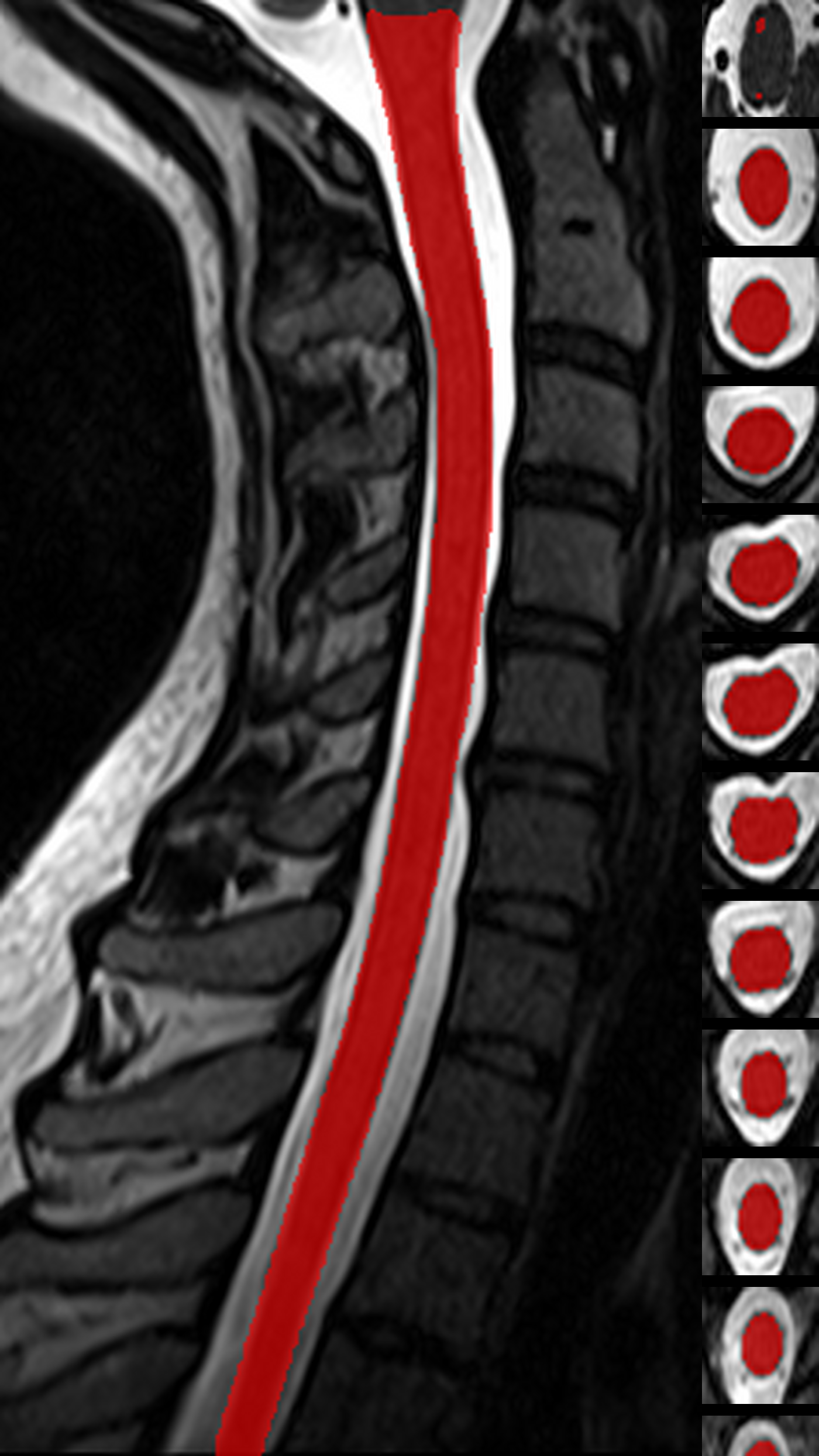
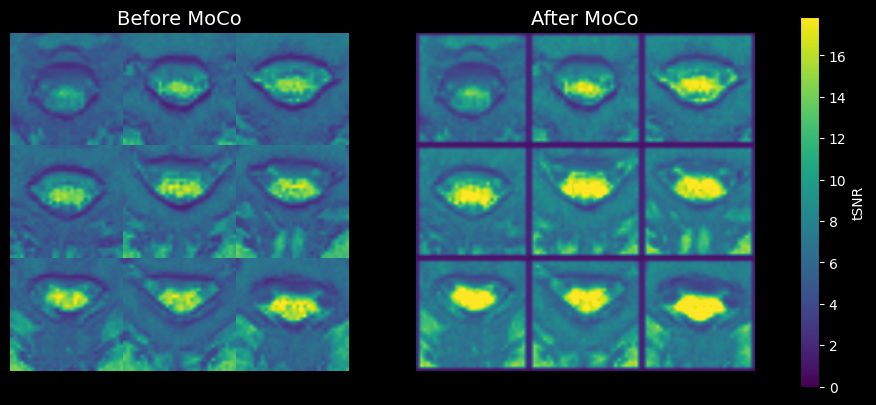
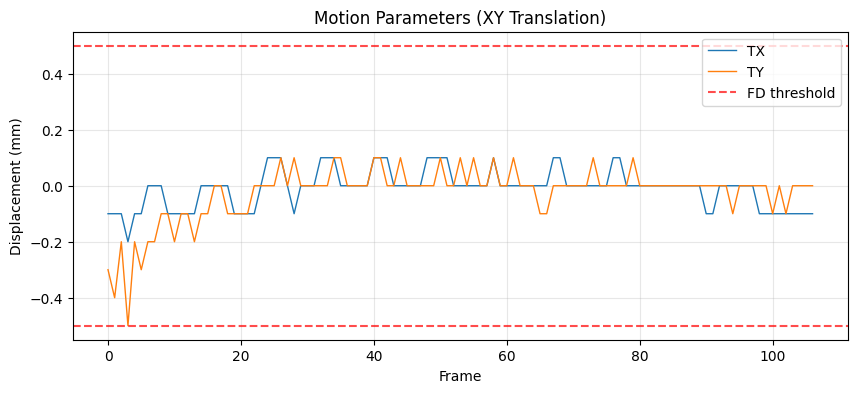
A reportlet for every step.
The human eyeballs the HTML; the numbers quantify the call. One PNG should tell you what failed and why.
What SpinePrep is — and what it isn't.
It is
A fully automated, reproducible, QC-first pipeline that packages the field's recommended cord-fMRI recipe (SCT, FSL, PAM50) into one BIDS-App command, with a readable report at every step.
It isn't
A new segmentation or registration algorithm, or a replacement for the tools it builds on. The science is theirs; SpinePrep is the engineering that makes it turnkey and reproducible.
Tested on
Cervical spinal-cord EPI-BOLD at 3 T, across nine public and internal datasets. It runs outside that envelope but warns you, and the report shows the levels actually covered.
Known limits
Methods validation is ongoing; cord-fMRI reliability is inherently modest; and it ships as a build recipe, not a prebuilt image. Treat results outside the tested envelope with care.
Build it, point it at your BIDS data, read the report.
SpinePrep ships as a build recipe — by choice — so its Apache-2.0 distribution stays free of FSL's non-commercial terms. You build once and obtain FSL under its own licence.
Container RECOMMENDED
docker build -f Dockerfile.spineprep -t spineprep:26.0.0 .
docker run -v /bids:/bids:ro -v /out:/out \
  spineprep:26.0.0 /bids /out participant
Docker locally, or convert to Apptainer for HPC. Everything (SCT, FSL, ANTs, PAM50) is inside.
Python layer ADVANCED
pip install spineprep
spineprep /bids /out participant
The orchestration layer installs from PyPI; the full pipeline still needs SCT, FSL and ANTs on your PATH.
An open BIDS-App for spinal-cord fMRI.
If SpinePrep is part of your analysis, please cite it — and the tools it stands on (SCT, FSL, ANTs, PAM50). A per-release archival DOI is minted via Zenodo.
@software{spineprep,
  title   = {SpinePrep: a containerised BIDS-App
             for spinal-cord fMRI preprocessing},
  author  = {Sharifi, Kiomars},
  year    = {2026},
  version = {26.0.0},
  url     = {https://spineprep.com}
}